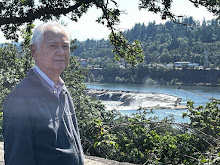
David B. Katague is an online memoirist and cultural essayist whose writing has appeared on HubPages

Tuesday, July 28, 2020

The First Filipinos Landed in Morro Bay, California in 1587


On 18 October 1587, the first Filipinos landed in what is now the Continental United States at Morro Bay in Upper California. They arrived aboard the Nuestra Señora de Buena Esperanza, which had sailed from Portuguese Macao, as part of the Manila galleon trade. During about three days of travels ashore around Morro Bay, the crew of the Nuestra Señora de Buena Esperanza came in contact with the Chumash people, ultimately resulting in the deaths of two crew members: one Spaniard and one Filipino.

Departing Morro Bay after the deaths of the crew members, the Nuestra Señora de Buena Esperanza eventually reached its intended destination of Acapulco. No other Filipino landed in California until 1595. In 1995, a monument on Morro Bay was dedicated to commemorate the events of 1587. October has been designated as Filipino American History Month since 2009 in recognition of these events.(Source: Wikipedia).

During the Manila-Acapulco Galleon Trade era from 1565 to 1815 Spanish galleons crossed the pacific between the Philippines and Mexico. On October 18, 1587, the Manila Galleon Nuestra Senora de Esperanza commanded by Pedro de Unamuno entered Morro Bay near here. A landing party was sent to shore which included Luzon Indios, marking the first landing of Filipinos in the continental United States. The landing party took official possession of the area for Spain by putting up a cross made of branches. The group was attacked by native Indians two days later, and one of the Filipinos was killed. Unamuno and his crew gave up further exploration of this part of the coast.

Historical Landmark Declared by the
Filipino American National Historical Society
California Central Coast Chapter
Dedicated October 21, 1995
static.px.yelp.com/bphot…
~~~~~~~~~~~~~~
Meanwhile enjoy this photo from my album:

One of the many orchids ( Princess Mikasa) in the Gardens of Chateau Du Mer,  Boac, Marinduque, Philippines

Saturday, July 11, 2020

Additional Information on my Great Grand Father-Victoriano Catague


The latest information I have about my great father was that he was a big land owner and rancher(cattle and horses) in Buenavista, Guimaras, Philippines. He also donated 36 hectares of land to the Boystown and Girlstown organization in the island. For details read the following from my blog and FB conversation with Conchita Catague who grew up in Buenavista, Guimaras. 


Here's an excerpt of my conversation with Conchita Catague of Buenavista, Guimaras. Conchita's grandfather ( lolo Ambo) is the younger brother of my Lolo Batol (Victoriano). 

Conchita: So related mn kmo ni tiyay Puri ky sya c Purification Lopez Catague ky didto ko na na kita c David Catague pgpatay ni tyay puri ba yon or my iban lng nga ocassion elementary pa ako sadto cla owner sng malapad nga duta d donated sa boystown c lolo victoriano ang owner nickname (Batol)

Me: Good to know. I like to know more about our Lolo Batol!

Conchita:Lolo Batol lapad duta dito sa Buenavista tyay puri donated 36 hectares to boystown then my gnpabay an sya nga duta until cultivated by one attorney but now that attorney died na kg my rancho dya amo na nga daku iya area d ky transfer nya iya rancho fr one place to his other are kg father ko ang iya upod bakero my latigo sya pirme para sa iya bakahan kg kabayo my pgka spanish sya ugali suno sa akon father ky si lolo ko Ambo iya manghud amo ngpuli d sa Guimaras halin sa Antigue kulasi Antique kg last time my ngpangita dire sng mga pamilia Catague ky my daku cla nga palanublion sa Antique malapad nga kadutaan kg sa barotac mn i dont know kn ano na natabu ky c tatay napatay 1997
1
Me: So we are 3rd cousins since your lolo Ambo and my Lolo Batoy were brothers, Now I know the Buenavista and Antique connections. Damo guid nga Salamat for the information.

Do you know Daisy Catague Cababasay ? She is the first cousin of my Father and they still have lands in Buenavista? Have you heard of Guillermo C(Katague) mto to Hofilena in Buenavista, What is the full name of Ambo? Is it Guillermo?
Conchita: Yes i know Daisy Catague Cababasay tambihanay lang km duta d sa Dan Nicolas ky cousin mn ila tatay n my father kilala gd ang mg cousin tyay puri and also Daisy's father 2nd wife c Daisy ang Ist wife cla Rodrigo yata
Dalawang ng asawa ang father ni Daisy kg sa 2nd wife sya

Me: Yes, Yes small world indeed! Could you write this all in English, so I could post as Addenda in my blogs.
Medyo mahina na ang Ilonggo ko.
Conchita: So ok i know fr my father lolo Batol had children here in Buenavista aside or kabit
And we are close also as relatives maybe Daisy dont know them but i know them ang during our Catague,s reunion we invite them

Me: Daisy is much younger than me so she does not as much as you do about the Catague Clan. Do you know any of the C(K)atague in Binalbagan, Neg Occ?
There is a Facebook Page Catague and Katague Clan- joined in and I will accept you! I am so happy to know you, because of your knowledge of our ancestry
Conchita:Ah i have heard so many of them they maybe related to Daisy because her mother is fr Negros sometimes Daisy's mother visit here in she said she had 11 children and I know also in south Cotabato and Zamboanga and i have sister Oliva Catague also in Bacolod have Oliva Catague in South Cotabato have Adelfa Catague also same i have a sister Adelfa because im the 2 nd to the youngest so i lived with my father most of his life so i know more about his relative ( our) we are also have a big family We are 14 Nd im the13th

Me: So is Daisy your second cousin?
Conchita: By the way how old are you now for i know a named od Dr. David Katague and my father said they are the owner of Katague buiding in Iloilo city and i know DrDavid Katague is one of that family owner since when tyay Puri died i think that Dr David Catague Was there? Not so sure but my father knows and have mention that named Dr David Catague

Me: Dr David Katague, former owner of the Katague Building was my father. I am his oldest son, David Jr. I will be 86 years old this coming December
Yes we are 2nd cousin but we ara not close they seldom visits here they have build a house here but as of now they just come here once a wk and Daisy dont come here wth his husband Leo
I think they (Daisy and Leo) have a fish pond in Buenavista, but she is busy with her restaurant in Iloilo
So ok we are 2 nd cousin also so you know Dra. Chythia Sedino Imaysay fr Kalibo aklan And Recto Catague Velez also attorney Hector Catague Veles They are brothers sister are Ng Alma Ng Nita Ng luz And ng Cristina there in Zamboaga
Yes they have and Leo so long stay abroad and after he retired plan to stay here i Guimaras not they rented fishpond sometimes drop here To Us Locon big shrimps

For Details on Marcelina Javellana wife of Victoriano Catague read the following also:
https://javellana.wordpress.com/

Thursday, April 9, 2020

Sunday, February 2, 2020

Forgotten Treasures Discovered After Clean-Up

After cleaning up several closets/storage house/garage, I discovered several items as shown in the photos below. 
 I found I had a two tie set in a beautiful leather case. I also found three miniature jeepneys and a lady finger folding back scratcher.  Most welcome discovery was the antique wood/leather foot rest.  I found it in the storage house. This foot stool was so heavy, I have to ask David III to bring it inside. It was dusty but after we cleaned it looked beautiful and shiny.


A wood and leather antique foot rest discovered in the Storage House

Wreath of Dried Leaves for Whole Year Fire Place Decor Found in the Garage
One Back Scratcher, Two Tie Set,  and Three Miniature Jeepneys Discovery


Twenty Belts Hiding in the Closet

Mini Lamp and Macrine's Doll Collection


Antique brass Lamp with marble decor found in the Garage

A Morion Souvenir from Marinduque
A Wood Carving Last Supper from Baguio


A Framed and Autographed Biyahe Tayo Flyer

I was not aware I had 20 belts in storage. I found also one of Macrine's favorite doll and a Mini Lamp, an antique brass lamp, a Last Supper wood carving and a Morion souvenir from Marinduque.

Therefore, If you are bored, clean-up your closets, garage, storage house or basement. You may be surprise of your discovery.

Today is Super Bowl Sunday, Ground Hog Day and a Date Palindrome that has not happened in over 900 years( 02/02/2020)

https://news.yahoo.com/sundays-date-rare-palindrome-hasnt-215126981.html

Friday, January 31, 2020

List of Medications for Erectile Dysfunction

This is the last article on my series of list of medications for common ailments/diseases in the US.  I hope you found the series informative. 


Medications Used to Treat Erectile Dysfunction (ED)

Erectile dysfunction (ED) is the condition of not being able to get or keep an erection that’s firm enough for sexual intercourse. It’s often caused by an underlying health problem. The Urology Care Foundation estimates that this condition affects 30 million men in the United States. For some men, treatment with drugs may resolve their ED.

There are many types of drugs used to treat ED. Each drug works differently, but they all improve sexual activity by stimulating blood flow to the penis.

The most common ED drugs belong to a group known as phosphodiesterase type 5 (PDE5) inhibitors. They block certain enzyme activity that leads to ED.

If you have certain health issues, it may not be safe for you to take ED drugs. For instance, if you have heart disease, your heart may not be healthy enough for sex.

Alprostadil (Caverject, Edex, MUSE) comes as an injectable solution and as a penile suppository. You’ll inject the solution directly into your penis 5 to 20 minutes before having sex. You can use it as needed up to three times per week. You should let at least 24 hours lapse between injections.

With MUSE (or Medicated Urethral System for Erections), the suppository should be administered 5 to 10 minutes before sex. It shouldn’t be used more than twice in a 24-hour period. The more common side effects of this drug include pain in the penis and testicles, as well as burning in the urethra.

Avanafil (Stendra) is an oral drug and a PDE5 inhibitor. You should take it about 15 minutes before having sex. Don’t take it more than once per day.

You shouldn’t use any PDE5 inhibitors if you’re also taking nitrates to treat heart disease. Examples of nitrates include isosorbide mononitrate (Monoket) and nitroglycerin (Nitrostat). Taking nitrates with avanafil can cause severely low blood pressure and even death. The more common side effects of this drug include:

Sildenafil (Viagra) is also a PDE5 inhibitor. Viagra is only available as an oral tablet. You should take it only once per day, about 30 minutes to an hour before sex. The more common side effects of this drug include:
  • headache
  • flushing
  • stuffy or runny nose
  • back pain
  • upset stomach
  • muscle aches
  • vision changes, such as blurry vision and changes in how certain colors look

Tadalafil (Cialis) is an oral drug that increases blood flow throughout your body. You take this PDE5 inhibitor about 30 minutes before sex, no more than once per day. It may work for up to 36 hours. The more common side effects of this drug include:
  • headache
  • flushing
  • stuffy or runny nose
  • back pain
  • upset stomach
  • pain in the limbs

Testosterone is the main sex hormone in the male body. It plays many roles in overall health. Testosterone levels naturally drop with age. This change can lead to ED and other issues, such as:
Doctors sometimes prescribe testosterone to treat ED. In fact, PDE5 inhibitors are most effective when used alongside testosterone therapy in men with a testosterone deficiency. However, the drug does come with risks. Testosterone can increase your chance of a heart attack or stroke. Because of these risks, the Food and Drug Administration (FDA)Trusted Source says that only men who have low testosterone due to certain health issues should use testosterone.

Your doctor will watch you closely if they give you testosterone. They’ll test the levels of testosterone in your body before and during your treatment with this drug. If your testosterone levels are too high, your doctor will stop your treatment or lower your dosage. Side effects of testosterone may include:
Testosterone for ED comes in many forms. The table below lists the forms of testosterone and their brand-name versions. Some forms may also be available as generic drugs.

Testosterone form
Brand names
Transdermal creamFirst Testosterone Cream 2%
Transdermal gelAndroGel, Fortesta, Testim, and Vogelxo
Transdermal patchAndroderm
Transdermal solutionNone (only available as generic)
Topical gelAndroGel and Natesto
Nasal gelNatesto
Oral capsule Testred
Oral tabletAndroid 25
Mucoadhesive film that dissolves under your gumsStriant
Pellet implantTestopel
Solution for intramuscular injectionDepo-Testosterone and Aveed

Vardenafil (Levitra, Staxyn) is an oral drug and a PDE5 inhibitor. You take it as needed 60 minutes before sex. You can take this drug up to once per day as recommended by your doctor. The more common side effects of this drug include:
  • headache
  • flushing
  • stuffy or runny nose
  • back pain
  • upset stomach
  • dizziness

There are many vitamins and supplements on the market that claim to help ED. Some promise better sexual function as well as increased energy and vitality. However, these supplements usually don’t work. They may also be unsafe.
Some supplements that are marketed as “natural” may even contain drugs. ED supplements can still interact with other medications you’re taking. They may also cause side effects. Talk to your doctor before using any vitamins or supplements for ED.

Not everyone with ED needs to take medications. If you think you have ED, see your primary care doctor. They’ll give you a physical exam and request certain lab tests, as well as a complete medical and psychosocial history.
They may also refer you to a mental health professional, who can help you manage performance anxiety or relationship issues related to your ED.

ED caused by underlying conditions

Your ED may be caused by untreated diabetes, high blood pressure, or another issue. Treating that condition first may improve your ED symptoms.

ED caused by medications

ED may also be caused by other medications you’re taking. These may include drugs used to treat:
Your doctor can review the drugs you’re currently taking. They may make some changes that can improve your ED.

ED caused by lifestyle choices

Sometimes lifestyle choices can contribute to ED. Adopting healthy habits may help improve your symptoms. Try avoiding smoking, maintaining a healthy weight, getting regular exercise, and keeping your alcohol intake in check.

Source: https://www.healthline.com/health/erectile-dysfunction/medication-list#work-with-your-doctor

Meanwhile, enjoy this photo from the Internet
Peter Peppers 

Also enjoy this video,
https://youtu.be/7KqlAMqkxt0 

Friday, January 3, 2020

Sea Creatures in the Coral Gardens of the Amoingon Coast

"I consider myself to be a pretty tough dude. Rough neighborhoods don’t bother me. But I was snorkeling today and ran into one of these motherfuckers swimming straight towards me and I started flailing around like a wild radioactive chicken, my mouthpiece filled with water, started choking cuz I thought I was drowning, and then swam back to shore like I was running from the cops.
My mom shouted over from sea asking why I wasn’t coming back in and I was like CUZ I’M CHILLIN’ DAMN WHY YOU ALWAYS GOTTA BOTHER ME, SHIT. I’M JUST TIRED CAN’T A FLIP GET SOME REST.


Photo: Zee Jambalos


The above two photos from the FB pages of Macrine's nephew and niece respectively reminded me of three articles about the Amoingon Coast of Western Marinduque, Philippines. The Amoingon Coast is the backyard of Chateau Du Mer- our second and vacation home in Boac.   

1. Snorkeling in the Amoingon Coast of Western Marinduque

Son David III after his daily snorkeling with Miko our pet dog at Amoingon Beach- a few meters from the CDM beach house.

Three weeks ago, two prospective clients for Chateau Du Mer from Australia and Virginia, USA asked me if the beach in front of the beach house is excellent for snorkeling. I told them, i really do not know( because I do not snorkle), but last year when my youngest son was vacationing here, he snorkeled almost every day when the waves are calm and the sun is bright. Their questions prompted me to search for old articles about the Amoingon coast. Attached is a posting from Marinduque Rising titled Amoingon Beach Colors written by the prolific writer, Eli Obligacion- a fellow blogger, former neighbor and friend.

marinduque rising: Amoingon beach colors: Just a few meters away from the pebble-strewn beach in the quiet coastal barangay of  Amoingon in Boac are coral gardens still home to a ...

Personally, I like to promote the Amoingon Coast as the snorkeling capital of Marinduque and the Torrijos Coast as the diving capital of the province.


2. A Paradise at Amoingon Coast

by Jane Dacumos on June 25, 2012

The western coast of Marinduque, known as the Amoingon Coast, is a coastal area with an abundant marine ecosystem. Just 10 to 15 meters away from the beachfront, the quiet coastal Barangay of Amoingon is home to a variety of tropical fishes, colorful butterfly fishes, bobbing clownfishes, lionfishes, melon-sized seashells, schools of angelfish, seahorses, and marine mollusks.

Amoingon is just over a mile away from the Port of Cawit in Boac. The beach itself is a tourist attraction. It is the home of numerous coral gardens. A railroad vine that help control erosion are allowed to bloom on this beach. These coral gardens welcome every visitor with a good and lovely charm.

Chateau-du-Mer is among the few resorts found in Amoingon with a beach house ideal for short vacations.

And Number 3: From Eli Obligacion Blog

http://marinduquegov.blogspot.com/2012/06/amoingon-beach-colors.html?spref=bl 

Meanwhile, enjoy this pompano sarciado, we had for our Dinner last night
 https://chateaudumer.blogspot.com/
Here's How Carlos described his encounter with the sea Creature above lurking in the Coral Gardens of our backyard at CDM*

Wednesday, January 1, 2020

The Twelve Days of Christmas


Our CareTaker wanted to help me take out our Christmas Decor today. I told her, we keep our decor after the Feast Of the Three Kings- the last day of the Christmas Season.  Of the 10 houses in our neighborhood, seven took our their Christmas lights on December 26.

This incident inspired me to search for more information on the 12th day of Christmas. Here's a summary of what I learn from the Internet.

"Most people today believe that the twelve days of Christmas start on December 12th or 13th and run through Christmas Eve or Christmas Day. But in fact, the first day of Christmas is December 25th and the final day is January 5th. Thus, for hundreds of years the Christmas holidays didn’t begin until Christmas Eve and didn’t end until Epiphany.


 https://youtu.be/vOwyMIoG5KI

Why were these twelve days important? These dozen days were tied to more than just the teaching of the Catholic Church. A host of other denominations also celebrated the twelve days of Christmas. Some denominations celebrated Christmas in January and began to count the twelve days then. But whenever they began, the counting of the days became an important facet of each holiday season. Even in the Dark Ages, in some Eastern European churches, the twelve days of Christmas meant attending daily church services.

For Christians who lived during this extremely difficult age, the twelve days were a time of re dedication and renewal. It was also a period when small, simple, and usually symbolic gifts of faith were given to children. Thus, in both coded poems and public worship, the twelve days were considered a holy period.

For many Christians today, even the recognition of the twelve days of Christmas has been lost . . . for two reasons. The first is that when Epiphany lost out to Christmas as the day of giving gifts, many simply quit celebrating the twelve-day observance. The other reason is based more on the change in the fabric of culture than on overlooking the Christian holiday of Epiphany.

In ancient times, when most societies were rural, few people worked in the dead of winter. It was a time when many were spending long, dark days inside their homes, looking forward to winter’s chill giving way to the spring thaw. So devoting a dozen days to prayer, reflection, and attending church was not a huge undertaking. Yet with the coming of the Industrial Age and the regular year-round work schedules it brought, finding time to continue the activities that had been traditionally associated with the twelve days of Christmas became all but impossible for most people.

So the passing of the twelve-days custom probably had as much to do with “progress” as with anything else. As fewer and fewer churches and families participated in the tradition, it was all but lost. Yet in the obscure poem that was later turned into a popular carol, “The Twelve Days of Christmas” live on. And the twelve days described are actually a wonderful and complete picture of the Christian faith.

The “true love” mentioned in the song is not a sweetheart but the Catholic Church’s code for God. The person who receives the gifts represents anyone who has accepted Christ as the Son of God and as Savior. And each of the gifts portrays an important facet of the story of true faith.

So, just a silly song? On the surface maybe, but in reality, a refreshing reminder of the essential elements of Christian faith. The twelve days of Christmas may no longer be a widely recognized holiday tradition, but the days were an important bridge that connected persecuted believers of the past with the whole story of God’s plan. In the complicated world of today, a trip back to the not-so-distant past when Christians celebrated the twelve days of Christmas would only enhance the meaning of Christmas for everyone".

For more information read:

https://www.crosswalk.com/special-coverage/christmas-and-advent/the-twelve-days-of-christmas.html

 Meanwhile enjoy this video of a Classical Trio:
https://youtu.be/CTXx_r6G1wE

Monday, October 28, 2019

October is Filipino American History Month

Fifteen Memorable Facts About Filipino-American History by Kevin Nadal

To celebrate Filipino-American heritage in honor of AAPI Heritage Month, I asked Fil-Ams from all over the country to share what they want the world to know about Filipino-Americans — what makes them memorable rather than forgotten.  This article reminded me of my recent article on Carlos Bulosan.

https://davidbkatague.blogspot.com/2019/10/an-update-have-you-heard-of-carlos.html

I am listing # 15 first, since I could identify with it during my employment with Food and Drug Administration from 1990 to 2002. I also added my own #16 at bottom of page.
  
15. And while May is Asian-American Pacific Islander Heritage Month, October is Filipino-American History Month!
Me pointing at my photo during Asian-American Week Celebration in FDA, 1998


Because of the unique experiences of the Filipino-Americans, Fred and Dorothy Cordova of the Filipino American National Historical Society declared October as Filipino-American History Month in 1988.

In 2009, both the U.S. Senate and Congress declared October as Filipino-American History Month. In 2015, President Obama recognized the month at a celebration at the White House.


1. Filipino-Americans are the second largest Asian-American group in the United States.


Courtesy of Liz Casasola

There are over 3.4 million Filipino-Americans in the country, the 2010 U.S. Census reported. That's about 20% of all Asian-Americans in the country!

2. Filipino-Americans are the largest Asian-American group in 11 out of the 50 states.


Courtesy of Greg Cendana

Filipino-Americans are the second largest Asian American group nationally, but they're the largest Asian-American group in 11 states, including California (which has the largest total population of Asian-Americans).

3. Filipino-Americans are one of the fastest growing immigrant groups in the United States.


Filipino-Americans are one of the largest foreign-born groups in the U.S. — about 5% of all immigrants in the country.

4. Filipinos were the first documented Asian people to arrive in the United States.


The first Filipinos landed in Morro Bay, California, in 1587, three decades before the Pilgrims landed on Plymouth Rock. These Filipino men escaped Spanish galleon ships en route to Spain. Some Filipinos migrated in similar ways and settled in the bayous of Louisiana in 1763, giving Filipinos deep roots in the U.S.

5. The Philippines is the only country in Asia to have been fully colonized by the United States.


After the Philippines gained independence from Spain on June 12, 1898, it was then colonized by the United States. The country did not regain its independence until July 4, 1946. As a result, American English is the second national language of the Philippines, and the U.S. has since maintained a military presence in the country.

6. A quarter of a million Filipino-Americans are veterans of World War II.


More than 250,000 Filipino soldiers fought under the American flag in World War II. They agreed to fight in the U.S. military on the promise that the government would grant these soldiers American citizenship and full veteran benefits. However, these promises were not granted until President Obama took office in 2009, and hundreds of thousands of Filipinos did not receive the benefits they were promised.
Today, activists are working for Filipino-American veterans to be recognized with the Congressional Medal, as they are the only ethnic group who served in World War II yet to receive this honor.

7. Filipino-Americans contributed significantly to the American labor movement, particularly with the United Farm Workers movement in the 1960s.


  • While Cesar Chavez and Mexican farmworkers are often credited with leading the Delano grape strike of 1965, Filipino-American farmworkers were the first to strike. Filipino-American leaders Larry Itliong and Philip Vera Cruz reached out to Cesar Chavez to fortify the union.
While internal power struggles resulted in Filipino-Americans distancing themselves from the United Farm Workers, many historians and activists like Dolores Huerta credit Filipinos with being the first to strike.

8. Filipino-Americans have been a part of many advocacy movements throughout U.S. history.


In the late ’60s, Filipino-Americans were at the forefront of the fight for ethnic studies in San Francisco. In 2015, Filipino-Americans fought for the Alvarado Middle School to be renamed the Itliong-Veracruz Middle School after the Filipino-American labor leaders. The school was the first school in the country to be named after a Filipino-American. In 2016, Filipino-Americans successfully attained historical recognition for the South of Market (SoMa) district of San Francisco to be renamed SoMa Pilipinas.

9. Filipino-Americans have a significant presence in the arts and in hip-hop culture.


Lea Salonga was the first Filipina to win a Tony Award. Filipino-American musicians include Bruno Mars, Vanessa Hudgens, and Apl.de.ap of the Black Eyed Peas. In hip-hop, many Filipino-Americans have excelled as DJs and beatmakers, like DJ Neil Armstrong, DJ Q-Bert, DJ Icy Ice, as well as b-boys and dance crews — including members of groups featured on America’s Best Dance Crew like the Jabbawockeez, Super CR3W, and Quest Crew.

10. Filipino-Americans are more likely than other Asian-American groups to marry outside of their race.


  • Contemporary studies find that racial identity may influence Filipino-Americans who are in interracial and interethnic romantic relationships, in that those who are married to non-Filipino Asian-Americans tend to identify more as Asian-American, whereas those who are married to black Americans or Latinos are more likely to view Filipino-Americans as a distinct ethnic group and feel more connected with black and Latino communities.

11. One-fifth of the Filipino-American population is multiracial.


  • Nearly 22% of Filipino-Americans identify as biracial or multiracial — much higher than the 8% of the entire Asian-American population who are multiracial. This phenomenon, scholars have argued, may be due to shared histories of colonialism, experiences with colorism and racial discrimination shared with black Americans, and shared American values, customs, and language with white Americans.

12. Filipino-Americans identify as members of many different religions.


  • About 90% of people in the Philippines identify as Catholic, thanks to Spanish colonialism. Four to five percent practice another form of Christianity, and another 4–5% percent identify as Muslim.

13. Many Filipino-Americans also choose not to identify as Asian or Asian-American, often due to a history of exclusion.


  • Research supports the idea that many Filipino-Americans do not identify as Asian or Asian-American. Potential reasons for this include having a darker skin color (or identifying as “brown”), having similar experiences with racism, or feeling excluded or marginalized in the larger Asian-American community.
Scholars have described how Filipino-Americans have historically felt marginalized in pan-ethnic Asian-American organizations, particularly given their lack of representation or leadership opportunities in these groups. Other researchers have found that many Filipinos identify more with Latinos than with East Asian-Americans.

14. Filipino-Americans have unique experiences with racism.


  • Studies have revealed that Filipino-Americans experience a range of racial microaggressions, including that they are misperceived to be members of other racial groups like Latino, multiracial, black, or Pacific Islander. Further, many Filipinos report being told that they are not “Asian enough” — by both Asian-Americans and non-Asian people.
Discrimination from other Asian-Americans results in a unique racial and ethnic Filipino identity: Filipino-Americans might reject a pan-ethnic Asian-American identity and develop a strong, ethnocentric, purely Filipino-American identity.

Source:  https://www.buzzfeed.com/kevinnadal/fil-am-history-facts
Meanwhile here's a short video summarizing Filipino-American history for your information:
https://youtu.be/7JlbyP3irNY

Allow me to add my #16:

16. Filipino Americans are involved in Science, Education, Health,  Public Service and Politics:  (See my Pinoy Pride List)

https://hubpages.com/business/caste-system-in-the-philippines

Linkwithin

Related Posts Plugin for WordPress, Blogger...