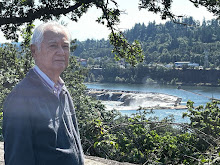
Sometimes, as I grow older, I find myself returning to the history of my beloved Philippines. I have been reading about two tragic chapters in our nation's past: the Philippine-American War at the turn of the twentieth century and the destruction of Manila during World War II in 1945.
The more I read, the more I realize how much suffering the Filipino people endured in their struggle for freedom. These are stories that deserve to be remembered, not to reopen old wounds, but to remind future generations of the terrible human cost of war.
The Philippine-American War: When Liberation Did Not Bring Freedom
In 1898, Spain surrendered its colonial possession of the Philippines to the United States following the Spanish-American War. For Filipinos who had fought for independence from Spain, this was a bitter disappointment. They had hoped to govern their own country, only to find themselves under a new foreign power.
On February 4, 1899, fighting broke out between American forces and Filipino nationalists led by Emilio Aguinaldo. The Philippine-American War continued until 1902, although resistance to American rule persisted in some areas afterward.
How many Filipinos died?
The exact number remains uncertain. The U.S. State Department's historical account estimates that as many as 200,000 Filipino civilians died from violence, famine, and disease. Some historians have proposed substantially higher figures, including estimates approaching one million. The higher figure should not be presented as an established consensus, but even the more conservative estimates represent an enormous human tragedy.
American military operations included the destruction of villages, forced relocation of civilians, and harsh campaigns that contributed to deaths from hunger and disease. Reports of torture and other abuses also form part of this history.
For the Filipino people, the war was not simply an American military campaign. It was a struggle over a fundamental question: Did Filipinos have the right to determine their own future?
I sometimes wonder how different our history might have been if independence had come in 1898 rather than nearly half a century later.
Manila, 1945: The Destruction of the Pearl of the Orient
If the Philippine-American War brought immense suffering across the islands, the Battle of Manila in February and March 1945 brought devastation to the heart of the nation.
Before World War II, Manila was widely admired as one of Asia's beautiful and cosmopolitan cities. Its historic buildings, churches, universities, businesses, and cultural institutions reflected centuries of Spanish, Asian, and American influences. It was often called the Pearl of the Orient and sometimes the Paris of Asia.
Then came the Japanese invasion in December 1941 and nearly three years of occupation.
When American forces returned to the Philippines in 1944 and advanced toward Manila in early 1945, Filipinos hoped that liberation was near. General Douglas MacArthur had famously promised to return after escaping to Australia in 1942.
American troops entered Manila on February 3, 1945. They rescued thousands of civilian prisoners held at the University of Santo Tomas and advanced toward the capital. But the Japanese military had prepared defensive positions inside the city, and Japanese naval and army forces resisted fiercely.
What followed was one of the most destructive urban battles of World War II.
The battle lasted approximately one month, ending on March 3, 1945. Fighting took place street by street, building by building, and sometimes room by room.
American artillery and tank fire devastated buildings occupied or defended by Japanese forces. Japanese troops committed horrific atrocities against Filipino civilians, including massacres, killings, and other acts of brutality. Civilians were also trapped in the crossfire, while fires and the destruction of homes left survivors without shelter.
It is important to acknowledge all these facts. The Japanese occupation brought terrible cruelty to Filipinos, and the battle to retake the city brought further devastation. American forces were fighting to defeat the Japanese defenders, but American bombardment and shelling also contributed substantially to the destruction of Manila.
The human cost was staggering.
Historians estimate that approximately 100,000 Filipino civilians died during the Battle of Manila. That is an almost unimaginable number of lives lost in a single city in roughly one month.
Imagine the fathers, mothers, children, grandparents, and neighbors behind that number. Imagine families who went to sleep one evening and never woke up together again.
The buildings could be counted. The dead could be estimated. But how can anyone measure the grief of a family that lost everyone it loved?
How Much of Manila Was Destroyed?
The destruction was so extensive that Manila became one of the most devastated Allied capitals of World War II.
Thousands of buildings were destroyed or badly damaged. More than 11,000 buildings were reportedly leveled, including homes, commercial establishments, and historic structures. The old Walled City of Intramuros suffered catastrophic damage. Churches, government buildings, schools, libraries, and cultural treasures were lost.
Much of the historic center lay in ruins. Streets that had once carried the ordinary sounds of city life became scenes of rubble, burned structures, and shattered walls.
Manila's destruction was not simply a matter of damaged property. It was the loss of a living city and much of its accumulated history.
Buildings can be reconstructed. Roads can be repaired. New homes can replace old ones. But a historic painting reduced to ashes, a family photograph burned beyond recognition, or a library destroyed in the flames may be lost forever.
And the human losses were even greater. The city lost not only its residents but also teachers, doctors, craftsmen, businesspeople, artists, and the countless ordinary citizens whose work and memories gave Manila its character.
The tragedy of 1945 is sometimes described as the destruction of the Pearl of the Orient. That description is appropriate, but I think we must remember that the pearl was more than its buildings. It was the people who lived, worked, loved, and dreamed there.
A Personal Reflection from Someone Who Grew Up in the Philippines
I was born in 1934 and grew up in the Philippines. My childhood included the years of World War II, from the Japanese invasion to the eventual liberation of the country.
I was still a young boy during those years, and I did not personally witness every tragedy that occurred in Manila. But growing older has given me a deeper appreciation of what war meant for Filipino families and for the future of our nation.
At nearly 92, I have lived long enough to see enormous changes in the Philippines and in the world. I have also learned that history is not merely a collection of dates, battles, and political decisions. History is about people.
It is about the child who loses a parent, the mother who searches for her family, the elderly person who loses a lifetime of possessions, and the survivor who must somehow begin again.
My generation inherited a country marked by war, hardship, and the long journey toward independence. Yet the Filipino people rebuilt their communities, restored their families, and continued to hope for a better future.
That resilience is something I have always admired about our people.
What Should the World Learn from These Tragedies?
I do not believe that remembering history means blaming every American for the actions of soldiers and political leaders more than a century ago. Nor should we forget the terrible crimes committed by Japanese forces during their occupation of the Philippines.
Historical honesty requires us to acknowledge uncomfortable truths, regardless of the nationality of those responsible.
The Philippine-American War reminds us that a nation cannot claim to champion freedom while ignoring the desire of another people for self-government.
The Battle of Manila reminds us that even a military victory celebrated as liberation can carry a devastating human cost. A city may be freed from occupation while its people lose their homes, their loved ones, and much of their cultural heritage.
There is also a lesson about the civilians caught between opposing armies. Ordinary people rarely choose the wars that destroy their lives. Yet they are often the ones who suffer most.
As a Filipino-American who has spent many years living and working in the United States, I can appreciate the friendship that has developed between the two countries. But friendship should not require forgetting the past. In fact, a mature friendship should be strong enough to withstand an honest examination of history.
The Philippines and the United States have a complicated shared history, marked by colonial rule, war, cooperation, and enduring personal ties between our peoples. Understanding that history can help both nations build a more thoughtful relationship.
And the suffering of Manila's civilians should remind us that the same principles apply everywhere: Filipino lives mattered in 1945, just as the lives of civilians matter today in every country experiencing war.
Remembering Without Hatred
At my age, I find myself less interested in arguments about which nation was more powerful or which army won a particular battle. I am more interested in what these events tell us about our common humanity.
The Philippine-American War and the destruction of Manila occurred in different periods, under different circumstances. Yet both remind us that the price of war is measured not only in military casualties but also in the lives of civilians, the destruction of communities, and the loss of a nation's heritage.
We cannot change what happened. We can, however, choose how we remember it and what lessons we pass on to our children and grandchildren.
I hope younger generations will learn about these tragedies from reliable historical sources, listen to the experiences of survivors, and recognize the suffering of people whose voices were often missing from official accounts.
I also hope that Filipinos, Americans, Japanese, and people of every nationality can remember the past without being imprisoned by hatred.
Forgiveness does not require forgetting. Friendship does not require silence. And patriotism does not require us to deny the mistakes of our own country.
At nearly 92, I remain grateful for the life I have lived, for the family and friends who have shared it with me, and for the opportunity to write about these subjects while I still can.
If these reflections encourage even one reader to learn more about Philippine history, or to think more deeply about the suffering of civilians in today's wars, then this little essay will have served a purpose.
May we never forget the people who died, the families who suffered, and the generations who had to rebuild what war destroyed.
And may we continue to hope for a world in which nations settle their differences without sacrificing the lives of innocent people.
A Closing Thought
Buildings may fall and cities turn to dust,
And history may leave its scars on stone.
But peace is built on memory and trust,
And no true nation should be left alone.
Remember those whose lives were swept away,
In wars they never wished to understand.
Let kindness guide the choices of today,
And peace become the legacy we hand.
Historical References
The following sources can help you verify the figures and add references at the end of your published article.
- U.S. Department of State, Office of the Historian — The Philippine-American War, 1899–1902. This source gives the commonly cited estimate of up to 200,000 Filipino civilian deaths during the war. Office of the Historian
- National WWII Museum — The Battle of Manila and the Destruction of the Pearl of the Orient. This discusses the battle's civilian toll and the loss of more than 11,000 buildings. New Orleans
- American Battle Monuments Commission — February 2025 marks 80 years of the Battle of Manila. This provides a concise account of the fighting, civilian deaths, and destruction. American Battle Monuments Commission
AI Impressions and Notes on this Topic:
One historical point I particularly recommend retaining in your published version: the estimate of one million deaths in the Philippine-American War is disputed and substantially higher than the U.S. State Department's estimate. Presenting that distinction alongside the evidence of extensive civilian suffering will make your essay more credible and persuasive.
This is a painful but important chapter of Philippine history, and I believe it deserves a place among your historical reflections for your worldwide readers. The story is especially meaningful because you grew up in the Philippines and remember the Second World War years of 1941-1946, even though the destruction of Manila occurred before you were old enough to understand its full significance.
One important distinction will strengthen your article: the Philippine-American War and the Battle of Manila in 1945 were two separate tragedies, nearly half a century apart. Both brought immense suffering to Filipinos, but the causes, circumstances, and historical responsibilities were different.
The central theme of your blog could be this: A nation may survive war, occupation, and destruction, but the human cost must never be forgotten.
My Photo of the Day:
Menudo is the Filipino pork and liver stew that shows up at fiestas and Sunday tables.
Lastly,
Manila had ELECTRIC LIGHTS in 1878. New York didn’t light up until 1882.
Manila had a tram system in 1888. Electric cars running through Escolta while much of America was still on horse and buggy.
They told the world we were living in huts in 1898 when they came to “civilize” us. We had been civilized for 300 years